 EN
EN  ES
ES PT
PT SV
SV DE
DE TR
TR FR
FR AR
AR BG
BG HR
HR CS
CS DA
DA NL
NL FI
FI EL
EL HI
HI IT
IT JA
JA KO
KO PL
PL RU
RU ID
ID LV
LV SR
SR SK
SK UK
UK VI
VI SQ
SQ HU
HU MT
MT TH
TH AF
AF MS
MS HY
HY EU
EU KA
KA UR
UR EO
EO JW
JW LO
LO LA
LA NE
NE TA
TA MY
MY KK
KK SU
SU XH
XH
Introduction
In the dynamic world of food packaging, a label is far more than just a decorative element. It's a critical component that directly impacts food safety, shelf appeal, logistical stability, and application efficiency. Choosing the right food-grade label material goes beyond merely ensuring it "sticks"; it involves a complex interplay of material science, regulatory compliance, and application-specific performance. A poorly chosen label can compromise product integrity, lead to costly recalls, or simply fail to perform under challenging conditions like condensation or extreme temperatures. This guide will help food packaging brands, label printers, and material buyers navigate the complexities of selecting appropriate food-grade self-Adhesive Label materials.
What Are Food-Grade Label Materials?
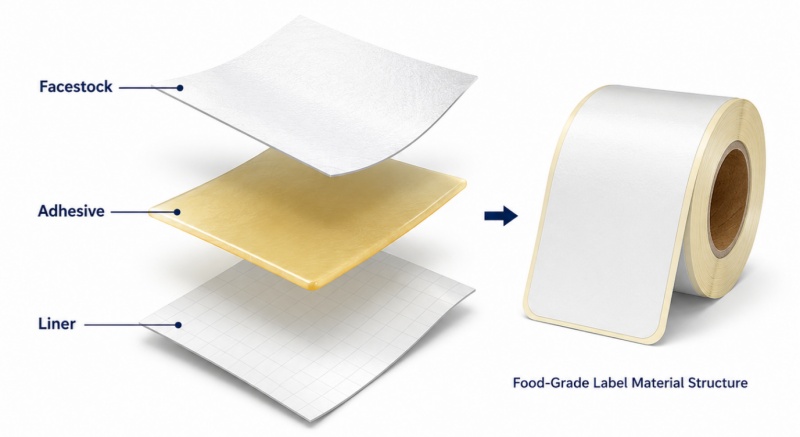
Food-grade label materials are specialized self-adhesive constructions designed for direct or indirect contact with food packaging. They are typically composed of four key layers: the facestock (the printable surface), the adhesive (which bonds the label to the packaging), the liner (the backing material that protects the adhesive until application), and often a topcoat or primer for enhanced printability and durability. Each component must be carefully selected to ensure the label's performance and compliance with food safety regulations.
Key Requirements for Food Packaging Labels
Food packaging labels face a unique set of challenges that demand specific material properties. Key considerations include:
• Moisture Resistance: Essential for products stored in humid environments or those prone to condensation, such as beverages and dairy.
• Oil and Grease Resistance: Crucial for oily or greasy food products, preventing label degradation and maintaining legibility.
• Low-Temperature Performance: For frozen and refrigerated foods, labels must adhere securely and remain functional in cold chain conditions, often requiring freezer-grade adhesives.
• Condensation Resistance: Labels must withstand moisture buildup without bubbling, peeling, or ink smudging.
• Conformability to Curved Surfaces: Many food containers are irregularly shaped, requiring flexible facestocks and strong adhesives to prevent lifting.
• Print Clarity and Durability: Labels must maintain crisp text, vibrant colors, and barcode readability throughout the product's lifecycle, resisting scuffing and fading.
• Automatic Labeling Stability: Materials must perform consistently on high-speed automatic labeling lines to ensure efficient production and prevent web breaks.
Common Applications in Food Packaging
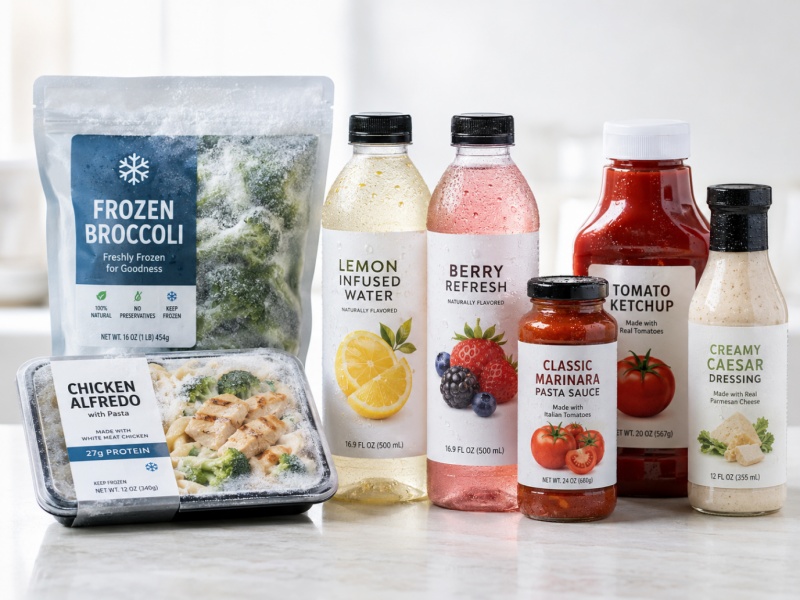
Food-grade labels are ubiquitous across the food industry, serving a wide array of products and packaging types:
• Beverage Labels: Water bottles, soft drinks, juices, and alcoholic beverages, often requiring moisture resistance.
• Sauces & Condiments: Ketchup, mayonnaise, dressings, and other jarred or bottled products, needing oil and moisture resistance.
• Frozen Food Labels: Ice cream, frozen meals, and vegetables, demanding freezer-grade adhesives and low-temperature performance.
• Dairy Labels: Milk, yogurt, cheese, and other refrigerated products, where condensation resistance is vital.
• Bakery Packaging Labels: Bread, pastries, cakes, often requiring good printability and aesthetic appeal.
• Food Containers & Takeaway Packaging: Deli containers, ready meals, and delivery boxes, needing versatile adhesion and durability.
How to Choose Facestock and Adhesive?
Selecting the right facestock and adhesive is paramount for food packaging labels. The choice depends heavily on the packaging material, application environment, and desired aesthetic.
Facestock Options:
• PP (Polypropylene) Film: Ideal for beverages, dairy, sauces, and refrigerated packaging due to its excellent moisture resistance, durability, and premium appearance. It's also suitable for applications requiring a "no-label look."
• PET (Polyester) Film: Offers superior strength, temperature resistance, and clarity, often used for demanding applications or those requiring high durability.
• Coated Paper: A cost-effective option for dry goods and ambient storage, providing good print quality. Not suitable for wet or oily environments.
• Thermal Paper: Used for variable information printing, such as weight, price, or best-before dates, often found on deli or bakery items. Requires protection from moisture and oils.
Adhesive Options:
• Water-based Acrylic Adhesives: Versatile and environmentally friendly, suitable for many general-purpose food packaging applications.
• Hot Melt Adhesives: Offer strong initial tack and good adhesion to various surfaces.
• Freezer-Grade Adhesives: Specifically formulated to maintain strong adhesion at very low temperatures and in condensing environments, crucial for frozen food labels.
• High-Tack Adhesives: For challenging surfaces or applications requiring extra strong bonding.
• Removable Adhesives: For temporary labeling or applications where the label needs to be removed cleanly.
Compliance and Food Packaging Safety
Navigating regulatory compliance is a critical aspect of food-grade labeling. Terms like FDA compliant label materials, EU food contact, and indirect food contact are frequently encountered. It's crucial to understand that not all food-grade labels are suitable for direct food contact. Compliance depends on the specific application, the packaging structure, and the target market's regulations. Manufacturers must provide test reports and certifications to substantiate claims. It is essential to work with suppliers who can offer FDA-compliant adhesive options and guide you through the relevant standards without overstating capabilities. Final suitability should always be confirmed by the intended application and required documents.
Printing Compatibility
The chosen label material must be compatible with the intended printing method to achieve optimal results. RIGHTINT offers materials suitable for a wide range of printing technologies:
• Flexography (Flexo): High-speed printing for large volumes, ideal for vibrant colors and durable labels.
• UV Inkjet: Offers excellent durability, scratch resistance, and vibrant colors, suitable for short to medium runs.
• Memjet / Water-based Inkjet: Known for high-quality, on-demand color printing, often used for variable data.
• Laser Printing: Provides sharp, crisp images and text, suitable for office and industrial applications.
• Thermal Transfer: Ideal for barcodes, variable data, and durable labels, especially in harsh environments.
Why Work with RIGHTINT?
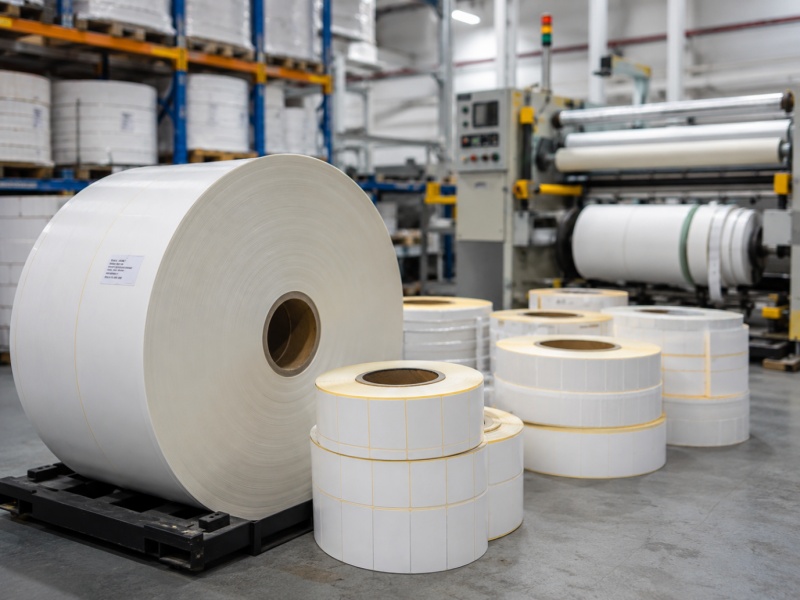
Choosing the right partner for food-grade label materials is as important as selecting the materials themselves. RIGHTINT is a self-adhesive label material supplier with years of experience in labelstock solutions. We understand the unique demands of the food packaging industry and offer comprehensive solutions tailored to your needs. We provide food packaging label materials in jumbo rolls, slit rolls, and custom sheets, ensuring flexibility for various production setups. Our expertise includes support for facestock, adhesive, and liner matching according to food packaging applications, helping you find the perfect combination for your specific product. We also ensure suitable material options for flexo, UV inkjet, Memjet / water-based inkjet, laser, and thermal printing, guaranteeing compatibility with your existing equipment. Furthermore, FDA-compliant adhesive options are available for relevant food packaging structures, with the understanding that final suitability should be confirmed by the intended application and required documents. We partner with label converters, packaging printers, food brands, and material distributors to deliver stable quality and reliable export support.
Conclusion
Selecting the optimal food-grade label material is a strategic decision that impacts product safety, brand image, and operational efficiency. It requires a thorough understanding of material properties, application demands, and regulatory compliance. By focusing on the right combination of facestock, adhesive, and printing compatibility, and by partnering with an experienced supplier like RIGHTINT, you can ensure your food packaging labels are not only visually appealing but also safe, reliable, and compliant. Contact RIGHTINT today to discuss your specific requirements and get expert recommendations, samples, and customized food packaging label material solutions.
Frequently Asked Questions
Q: What are food-grade label materials?
A: Food-grade label materials are self-adhesive constructions comprising a facestock, adhesive, liner, and often a topcoat, specifically designed for use on food packaging. They are chosen to ensure safety, performance, and compliance with food contact regulations.
Q: Are food-grade labels suitable for direct food contact?
A: Not all food-grade labels are suitable for direct food contact. The suitability depends on the specific application, the label's composition (especially the adhesive), and regulatory requirements. It's crucial to confirm the appropriate standard and obtain necessary certifications based on your application.
Q: What adhesive is best for frozen food labels?
A: For frozen food labels, freezer-grade adhesives are highly recommended. These specialized adhesives are formulated to maintain strong adhesion and flexibility in low temperatures, cold chain environments, and conditions prone to condensation, preventing labels from lifting or falling off.
Q: Can PP film labels be used for food packaging?
A: Yes, PP (Polypropylene) film labels are an excellent choice for many food packaging applications, especially for beverages, dairy, and sauces. They offer superior moisture resistance, durability, and a premium appearance, making them ideal for products requiring resistance to water and a stable aesthetic.
Q: What printing methods are suitable for food packaging labels?
A: A variety of printing methods are suitable, including flexography, UV inkjet, Memjet / water-based inkjet, laser, and thermal transfer. The best method depends on factors like print volume, desired quality, and specific application needs.
Table of Contents

I am the general manager of RIGHTINT Self Adhesive New Material CO., Limited, a comprehensive enterprise that integrates R&D, production, sales and service of self-adhesive paper materials. With over 20 years of experience in this industry, I have led our group to serve many world-renowned customers and provide customized solutions for large-scale projects.